We often talk about inclusion as though proximity is proof of equity.
Put disabled students in mainstream classrooms. Integrate them. Give them access to the same physical space as everyone else and call it inclusion.
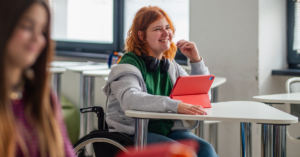
Inclusion without support is not inclusion. It is a physical presence without access. Participation without accommodation. A seat in the room without the tools to succeed in it.
A recent Ontario Divisional Court decision, Furgasa v. Toronto District School Board , exposes exactly how fragile and performative our inclusive education systems can be when support becomes optional and accountability becomes circular. The Furgasa family sought recourse through the Ontario Special Education Tribunal regarding the placement decision for their child. The family also sought recourse from the Ontario Human Rights Tribunal regarding accommodations due under the Human Rights Code of Ontario. At every turn, the family faced roadblocks: from the school board and the specialized tribunals intended to support the rights of their child.
K.S., the child at the centre of this procedural nightmare, is a student with autism. The family had been advocating since at least 2018 for what they argued was necessary for meaningful access to education: placement in a regular classroom with one-to-one support.
For years, the family fought through Ontario’s special education process. The school board maintained that one-to-one support was not part of “placement,” but merely a service.
The Ontario Special Education Tribunal said it could decide placement but not the support services that would be required within a placement – a position it has held for decades. The Divisional Court saw the fallacy of this position and said that this interpretation was too narrow.
The Human Rights Tribunal initially revived the family’s related discrimination claim, only to later dismiss it summarily, finding it had no reasonable prospect of success. This finding was strongly criticized by the Divisional Court stating that it was “nothing short of shocking.”
The Divisional Court was blunt. It called the system a “procedural morass” and said plainly, “the system must do better.” This finding matters, because this case is not just about one student. It exposes something much bigger: the institutional habit of separating placement from support, as though a placement decision can be meaningfully made without discussing the supports and services that a child needs to succeed.
The Divisional Court rejected that narrow logic and it made clear that placement is not just physical location. Placement exists within a program, and programs are delivered through services. Those things are interconnected, not optional layers that can be stripped away.
This shift is profound because it challenges one of the most common ways institutions minimize responsibility and get away with it. They narrow their obligation by narrowing the definition.
If “placement” only means where a child sits, then boards can claim inclusion while denying the support required to make that placement functional. It can declare a child has also been accommodated by segregating them away to where the “services” live, or at least where they are willing to put them, dramatically impacting that student’s access to the wider school life and society and to a meaningful education.
That is not inclusion. That is institutional optics.
And when we zoom out, the data raises even bigger questions.
According to the Toronto District School Board’s own 2023–24 Ontario School Information System (OnSIS) reporting, there were zero students identified under Speech Impairment in both elementary and secondary panels. Zero, which is impossible.
Speech Impairment remains a recognized exceptionality category within Ontario’s special education system. So where are those students? Have they disappeared? Or, are children simply not being formally identified under a category that could trigger rights, supports, and procedural protections? These are not minor administrative questions. They are access-to-rights questions.
The same OnSIS data shows that in the 2023–24 school year, 679 elementary students and 81 secondary students who were not formally identified as exceptional were nevertheless placed in special education class placements.
Plainly, this is segregation, without any due process. While IAO is comfortable supporting children with disabilities in the regular classroom simply on the strength of the Human Rights Code obligations, a placement in a segregated classroom is not legal without the formal identification process. Formal identification does not simply serve as a label. It is what creates procedural safeguards, appeal rights, review mechanisms and accountability.
So when students are being educated in segregated environments without formal identification, serious questions arise:
What process got them there?
What protections exist for them?
Who reviews whether that placement is appropriate?
And how do families challenge it?
That is the bigger issue.
We can’t simply ask whether support was denied, we have to question whether systems are designed in ways that make challenging decisions nearly impossible.
In disability rights law, the duty to accommodate is not about ideal outcomes. It is about meaningful access. A child does not need the “perfect” accommodation. They are, however, entitled to one that gives them real, substantive access to education.
This case reminds us that rights are only as good as the people in the systems that enforce them.
If families are bounced between tribunals, if boards can narrowly define their obligations, if students can be physically included but functionally excluded, then the system is not inclusive: it is simply procedural steps veiled as recourse while a child’s education is lost in the quagmire. And that is certainly not justice.
If Ontario is serious about inclusive education, then it needs more than policy language. It needs accountability. It needs transparency in identification practices. It needs scrutiny of segregated placements. And it needs a legal framework where accommodations and support is understood not as an add-on to inclusion but as the very thing that makes inclusion possible.
Disabled students deserve more than access to the room. They deserve access to the education happening inside it. And families should not have to spend years asking what is already their child’s right.
This decision is an important reminder that systems are not measured by their intentions. They are measured by whether people can actually access what they are entitled to..
For disabled students in Ontario, that promise is education.
The Toronto District School board has sought leave to appeal this decision and has clearly signaled it is not prepared to make good on its legal obligations. If the Court of Appeal grants leave to hear the appeal, IAO will seek intervener status to support the rights of students to be supported in the regular classroom.